
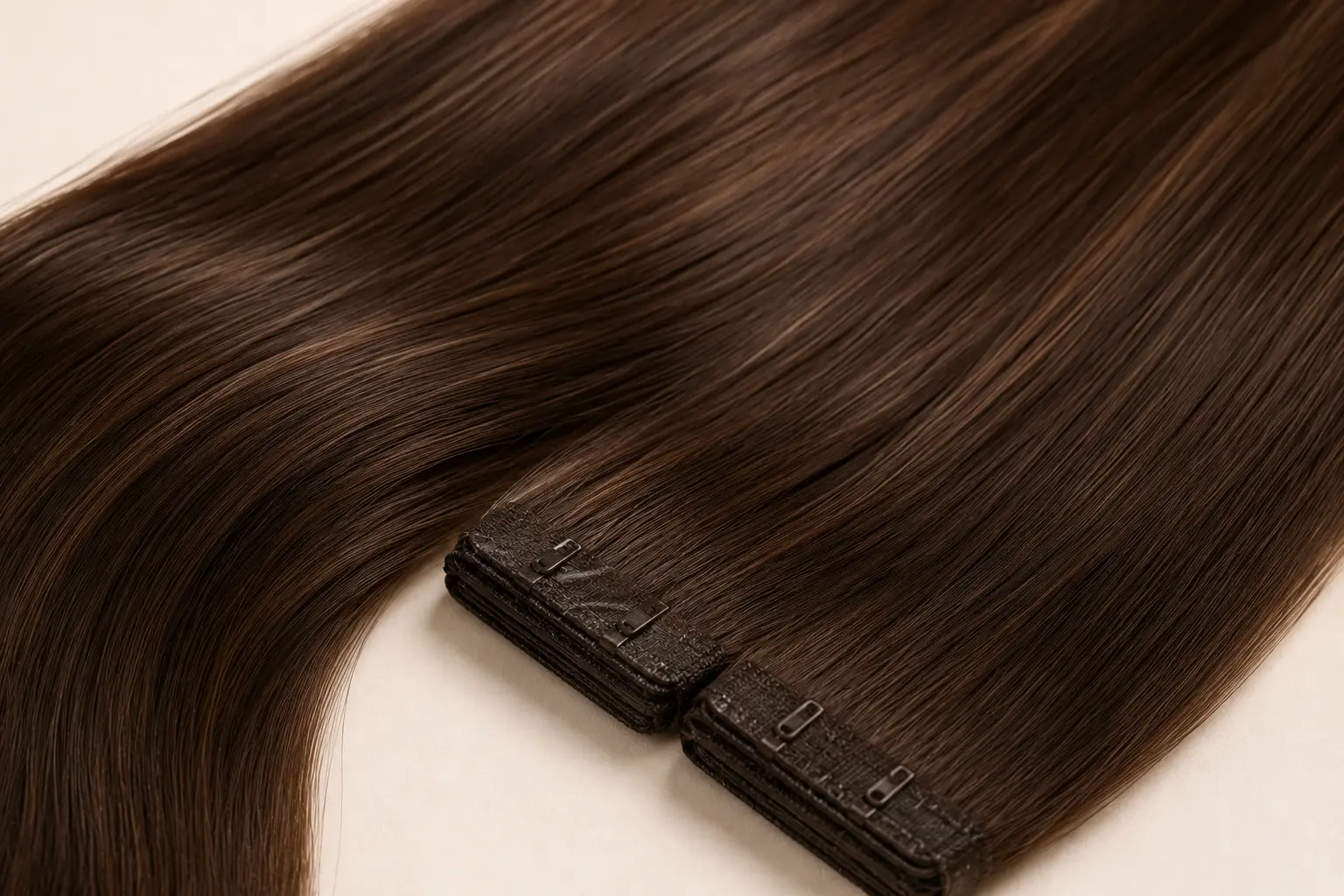
Remy hair can take heat because it is human hair — but it does not regenerate oils the way a scalp-fed strand does. Every pass of an iron is permanent wear. Thoughtful heat styling keeps movement and shine; careless heat turns Remy brittle and porous.
Temperature guidelines
- Fine or previously lightened Remy: 150–170°C (300–340°F)
- Virgin or denser Remy: 170–185°C (340–365°F)
- Never required: Above 200°C for everyday styling — that range is for rare reshaping under professional control
Use tools with a true temperature display. “High / medium / low” switches are guesswork.
Prep that actually helps
- Start with fully dry, detangled hair — water + heat = steam damage.
- Mist a heat protectant through mid-lengths and ends; keep sprays off tape and bonds.
- Work in small sections so you do not chase the same piece five times.
Curling for a blended finish
Curl your natural hair and extensions on the same barrel, in the same direction pattern you normally use. Alternate directions for a softer, less “pageant” wave. Allow each curl to cool in your palm or on a clip before brushing out — cooling sets the shape so you can use less heat next time.
One clean pass at the right temperature beats three frantic passes at a higher one.
Straightening without frying the ends
Glide slowly with light tension. Remy ends are the oldest part of the fibre — over-straightening them creates the straw texture clients blame on “bad hair” when it is usually accumulated heat. Finish with a pea-size serum on the last inch only.
Heat-free days
Alternate with braids, soft rollers, or Velcro volume at the crown. Remy responds beautifully to overnight sets on dry hair. Your extensions — and your natural lengths underneath — will last longer for it.
Shop heat-friendly Iconic Locks Remy extensions and pair them with gentle care from our hair care edit when you are ready to refresh your styling routine.